
What If Mobility Isn’t the Problem?
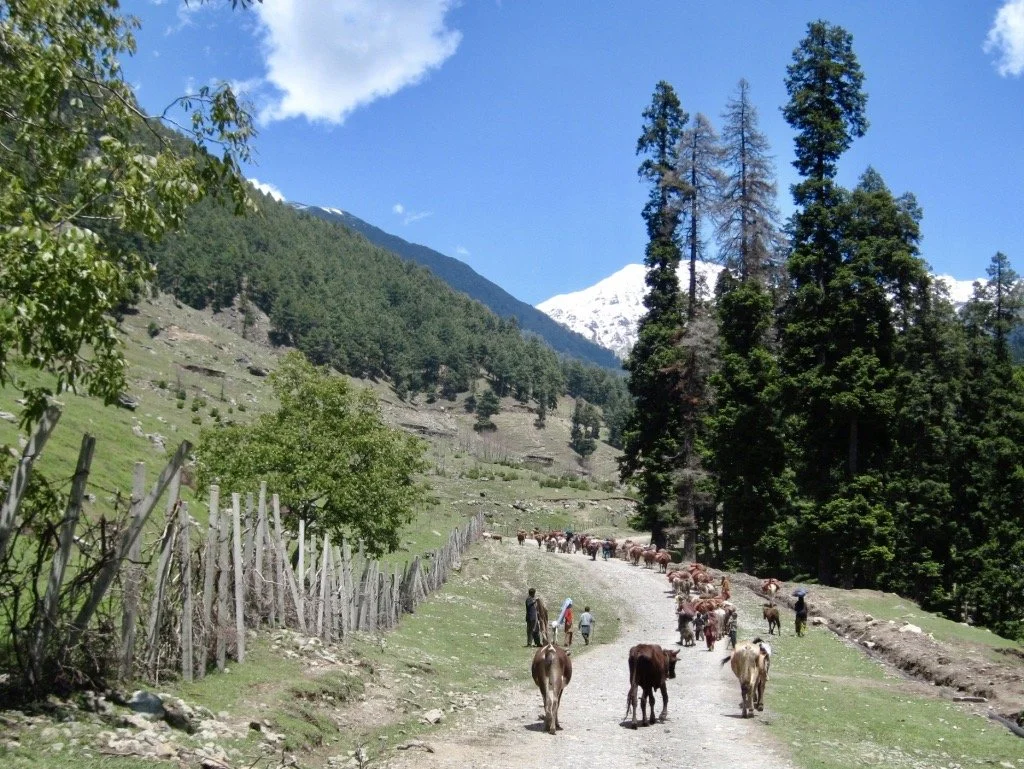
People and livestock moving through the Wardhwan Valley, before the arrival of vehicle access. Mobility here was not aimless wandering but a practical way of moving through—and living with—the landscape.
For generations, settled societies have looked at nomadic peoples and seen a problem.
They move.
Their children may move with them. Their animals need pasture somewhere else next month. Their relatives may live across a border. Their livelihoods don't always fit neatly within districts, provinces, school systems, healthcare systems, census categories—or mission strategies.
So the solution has often seemed obvious:
Help them settle.
Governments have tried it. Development organizations have tried it. Mission organizations have sometimes assumed it without even realizing they were doing so.
But what if we've been asking the wrong question?
What if mobility isn't the problem?
Maybe our systems don't move
Think about how much of modern life begins with a question nomadic peoples can find surprisingly complicated:
What is your permanent address?
Where do you live?
Where do your children attend school?
Which district provides your healthcare?
Where are you registered?
Where do you work?
Where do you worship?
These are perfectly reasonable questions in societies organized around settled people. But they reveal something about us as much as they reveal anything about the people we're asking.
Our systems expect people to stay put.
For many nomadic communities, however, mobility isn't random wandering. It can be an extraordinarily sophisticated way of living in environments where resources themselves move or change.
Pastoralists move animals toward water and seasonal grazing. Fishing peoples follow fish, currents, weather, and seasons. Trading communities maintain networks across enormous distances. Families may distribute themselves strategically across several locations while remaining part of one social world.
Mobility can spread risk, maintain relationships, protect livelihoods, and connect communities.
We've explored this before at NPN in talking about mobility as a community resource.
The point isn't that mobility is always good. Nomadic peoples face displacement, conflict, closed borders, disappearing pasture, changing climates, inadequate healthcare and education, and sometimes crushing political pressure. Traditional patterns themselves continually adapt.
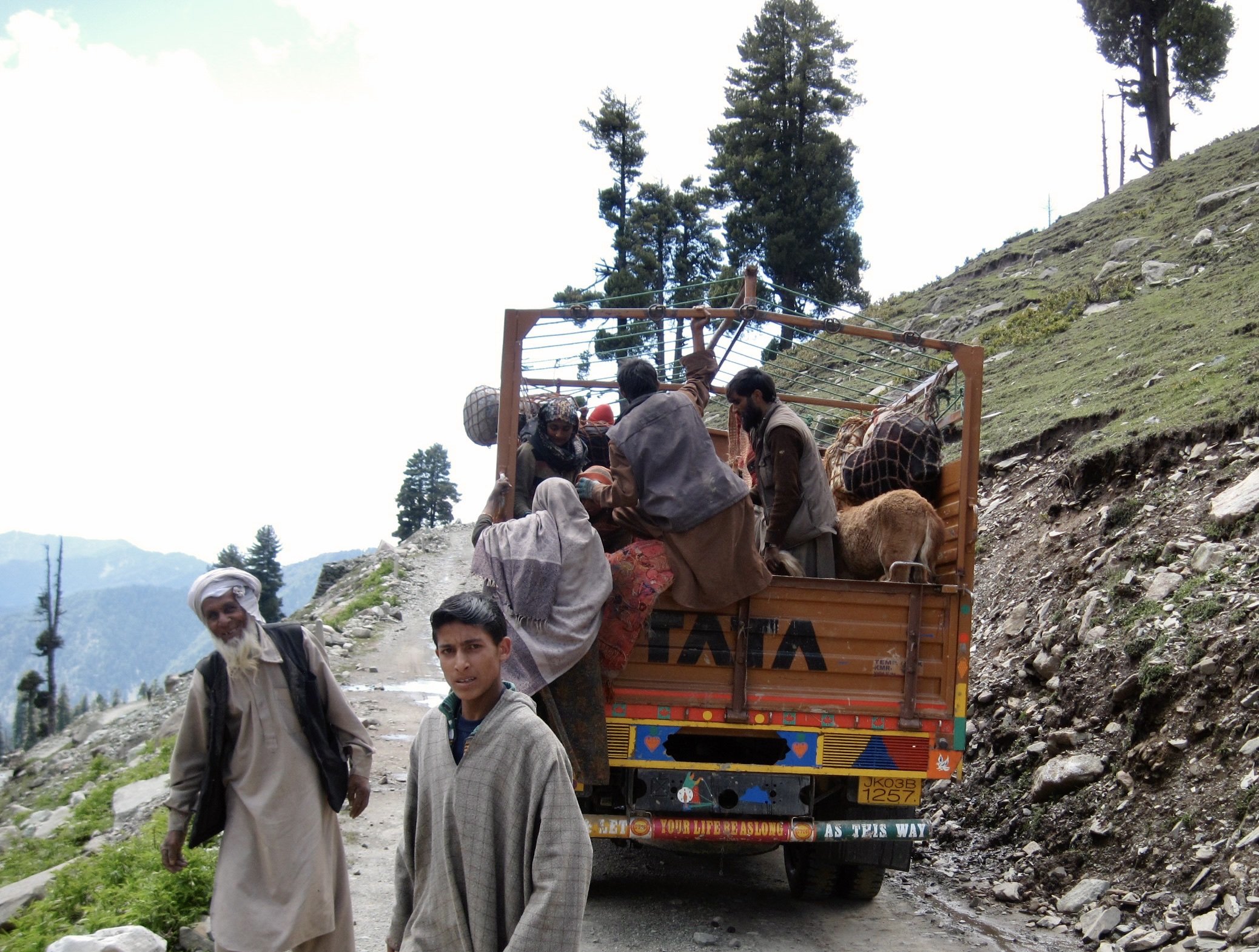
Loading people, animals and belongings for the journey across Margan Top. Nomadic mobility is not frozen in the past; communities continually adapt available forms of transport to changing routes and conditions.
But movement is not automatically evidence that something has gone wrong.
Sometimes the people who look unstable to us are remarkably well adapted to the world in which they live.
The problem may not be that they move. The problem may be that our systems don't.
You don't have to live in a tent to be a nomad
There's another complication.
Nomadic peoples don't necessarily stop being nomadic when they stop moving.
Spend enough time around communities with a strong nomadic heritage and you begin to notice that mobility is only part of the story.
Kinship matters.
Belonging matters.
Hospitality matters.
Networks matter.
Decisions may be made in ways that seem puzzling if we're expecting autonomous individuals to decide what is best for themselves.
A family living today in an apartment in London, Nairobi, Toronto, Kuala Lumpur or Berlin may remain deeply connected to relatives spread across several countries. Money moves through those relationships. Marriage decisions move through them. News travels through them. Obligations travel through them. Identity travels through them.
The herd may be gone.
The social world may remain.
That's one reason we've spent time at NPN asking what actually makes a NOMAD a nomad. The acronym NOMAD has helped us look beyond movement alone toward networking, kinship organization, mobility as a community option or resource, autonomy, and distinctiveness from surrounding sedentary societies.
Those aren't boxes into which every mobile people neatly fits.
They are clues that help us learn to see.
And increasingly, we need those clues not only in deserts, mountains, forests and grasslands.
We need them in cities.
The nomadic world may be across the street
When Christians hear nomadic peoples, it's easy to imagine someplace far away.
A camel caravan crossing the Sahara.
A Bedouin tent in Arabia.
Reindeer herders somewhere above the Arctic Circle.
Shepherds leading flocks through the Himalayas.
Those worlds still exist.
But so do Somali-background families in European and North American cities. Fulani communities moving between rural and urban worlds in West Africa and France. Roma communities across Europe and the Americas. Bedouin and other Arabian families navigating enormous social changes. Gujjar families moving between mountain pastures, towns, universities, government jobs and diaspora communities. Maritime peoples such as the Sama Bajau negotiating lives increasingly connected to coastal cities.
And countless smaller peoples remain almost invisible outside the places where they live.
Some of them may now be your neighbors.
That matters for anyone thinking about cross-cultural ministry.
You may not need an airline ticket to begin learning.
You can learn to pronounce someone's name.
You can eat food you've never eaten before.
You can learn to receive hospitality instead of always being the one offering it.
You can discover why asking an individual to make a decision independently of family may communicate something very different from what you intended.
You can learn to listen before explaining.
You can discover that the person you thought you were going to help may have quite a lot to teach you!
My colleague Jeannie Marie has captured this beautifully in the phrase Across the Street and Around the World. Sometimes going across the street can become part of our preparation for going around the world.
And sometimes the nations have already come across the street to us.
What if our mission strategies don't move either?
The same settled assumptions that shape governments and schools can quietly shape Christian ministry.
We ask:
Where is the church?
Who is the pastor?
What time does it meet?
How many individuals attended?
How many individuals decided to follow Jesus?
Where can we build?
Where can we establish a training center?
Again, those aren't necessarily bad questions.
But what happens when a community's social geography is built around kinship rather than neighborhoods?
What happens when people move seasonally?
What happens when part of the family moves while another part remains behind?
What happens when the same people live in several places during different parts of the year?
What happens when following Jesus is heard as an invitation not merely to trust the Good Shepherd, but to leave us and become one of them?
We've wrestled with some of that already in asking why “church” can sometimes sound like bad news and what it might mean for people towalk together before believing together.
Those questions have increasingly led me toward another one.
Instead of beginning with:
How do we get nomadic peoples into the Christian structures we already know how to build?
What if we begin with:
What is the Shepherd already doing among them—and how can we learn to walk with Him there?
God has never had much trouble moving
That question shouldn't seem particularly radical to people who read the Bible.
Abraham moved.
Jacob moved.
Israel encountered God in the wilderness.
The tabernacle moved.
David knew life among flocks, caves and shifting loyalties.
Exiles moved.
Jesus walked.
His disciples were sent.
Paul seems almost incapable of staying anywhere for very long.
We've looked more closely at this in The Biblical Story Is a Nomadic Story (and We Forgot).
The point isn't that everyone in the Bible was a nomad. They weren't.
It is that Scripture doesn't treat mobility as something inherently incompatible with belonging to God.
God moves with His people.
Perhaps our task, then, isn't to carry a stationary God into a mobile world.
Perhaps it is to discover where the Shepherd is already walking.
First, we have to see the gaps
This is where curiosity needs to become more than curiosity.
Nomadic peoples are fascinating.
Their histories are fascinating. Their ecological knowledge, languages, migration routes, oral traditions, kinship structures, poetry, music and strategies for survival can keep anthropologists—and people like me—occupied for a lifetime.
But fascination isn't enough.
Around the world there remain peoples and places shaped by a strong nomadic heritage where access to the Good News of Jesus is extraordinarily limited.
Some are large peoples whose names you may recognize.
Others number only a few thousand.
Some still move with animals, boats or seasons.
Others now live primarily in towns and cities while maintaining social worlds shaped by generations of mobility.
Some appear in our mission databases.
Others virtually disappear inside broader ethnic, linguistic or national categories.
If we cannot see the gaps, we are unlikely to fill them.
And filling a gap doesn't mean parachuting in with answers.
It means showing up.
Learning.
Listening.
Receiving hospitality.
Walking alongside families and communities rather than extracting individuals from them.
Pursuing peace, loving mercy, and walking humbly with God among people whose world may initially make very little sense to us.
It means becoming Good News messengers who expect the Good Shepherd to be ahead of us.
Come look again
That's where I hope to take this blog in the months ahead.
We've already spent time exploring what makes nomadic peoples distinctive, why mobility can be a community resource, how kinship shapes belonging, and why settled forms of Christian life don't always translate as naturally as we imagine.
Now I want to keep following those questions.
We're going to listen again to the prophets.
We're going to stand beside fishermen in Galilee and discover that “fishers of men” may have sounded rather different to Jesus' first hearers than it does on our coffee mugs.
We're going to walk into the deserts of ancient Arabia and find nomads scratching prayers, grief, names—and perhaps surprisingly early encounters with Jesus—into stone.
We're going to meet scholars learning to hear those forgotten voices.
We're going to ask why nomadic peoples can virtually disappear from histories and databases written by settled people.
And we're going to look for the gaps today.
Along the way, I hope some of you who are pastors and Bible-study leaders will discover parts of the biblical world you have rarely noticed.
I hope some of you who are wondering where you might fit in God's work among the nations will begin looking differently at the immigrant or refugee communities across the street—and perhaps eventually find yourselves joining, forming or sending a team somewhere you never expected.
And increasingly, I hope some of you reading this who are from nomadic peoples yourselves will join this conversation and help the rest of us see what we've missed.
Because perhaps nomadic peoples haven't been absent from the story.
Perhaps our settled ways of seeing have made them difficult to see.
So let's begin again with the question:
What if mobility isn't the problem?
What if the first thing that needs to move...
is us?
What do you think? The “Comments” area below is there for you!