
Why Must the World Come Through Europe to Meet Jesus?
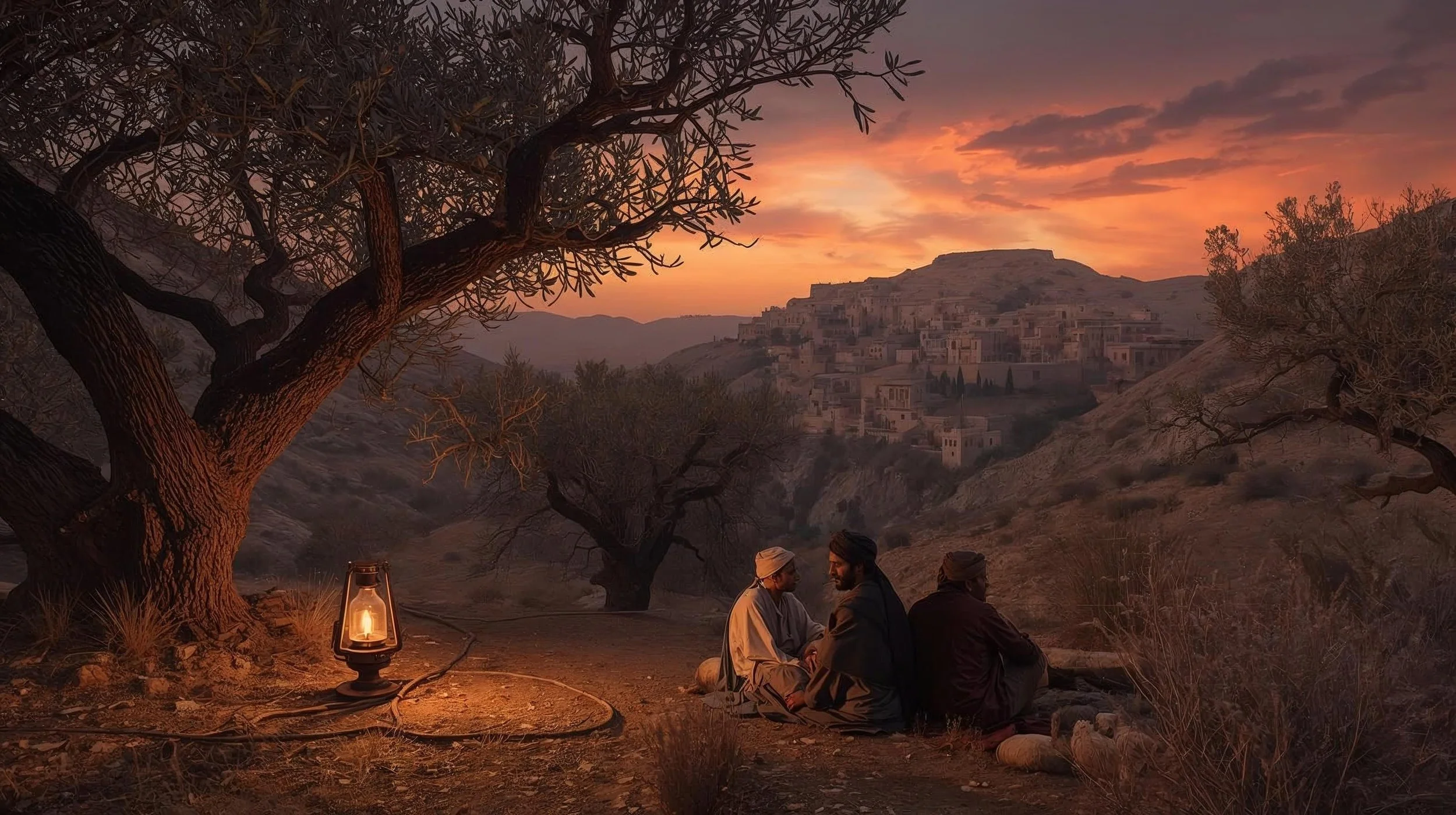
Why should “Christmas” look like a Northern winter holiday?
Over the past few days, I’ve received warm “Christmas” greetings from friends in Kyrgyzstan, India, Pakistan, Indonesia, Kenya, Nepal, and Nigeria—from Muslim, Hindu, and Christian friends from a wide range of non-Western backgrounds. Many messages included images of Christmas trees, wrapped presents, and even the familiar red-suited Santa. I was genuinely touched by the kindness, generosity, and goodwill behind them.
And yet, they also made me pause.
When we say the words “Christmas tree,” what do we picture? Be honest. Do we imagine a date palm or an olive tree—trees that actually grew in and around Bethlehem during the time of Jesus’ birth? I didn’t. Most of us instinctively picture an evergreen dusted with snow.
Here in southern Spain, where I’m currently living, the pause feels even sharper. We’re on the Mediterranean coast, climatically and geographically much closer to the biblical world than northern Europe. Olive and orange trees fill the landscape. I have one of each at my house! This morning I saw Snow! But it exists only on distant, barren mountain peaks where almost no one lives—much like the hills of Israel. And yet, the decorations, music, imagery, and even emotional tone of “Christmas” are almost entirely borrowed from the cold, snowy northwest of Europe.
So why is that?
When Culture Masquerades as “Biblical”
This question connects to something I’ve been wrestling with—and teaching—more and more over the years:
Why should all peoples have to pass through North-Western European language and culture to get to Jesus?
Most of us don’t intend to do this. But in practice, we often export our ways of reading Scripture, doing church, celebrating faith, and naming theological ideas as if they were simply biblical, rather than deeply cultural. I regularly hear people say—sometimes with great confidence—“This isn’t cultural; it’s biblical.”
The longer I live cross-culturally, the more that claim triggers my gag reflex.
Of course, Scripture itself is authoritative. But our ways of packaging it, explaining it, celebrating it, and embodying it are not culture-free. They never have been.
Christmas as a Case Study
The word Christmas is a helpful example.
“Christmas” comes from the Old English Cristes mæsse, meaning “the Mass of Christ.” It’s a medieval Western church term, not a biblical one. The earliest followers of Jesus did not celebrate His birth as a fixed annual holiday. They proclaimed it as Good News—an announcement of hope, kingship, and God drawing near—received in homes, fields, and along the road, often by people on the margins.
Using the word Christmas isn’t wrong. Celebrating the birth of Jesus isn’t wrong. But when Christmas—along with its imagery, music, calendar, and cultural assumptions—is treated as the faithful or biblical way to engage the birth narratives, something subtle happens. We quietly ask the rest of the world to adopt our cultural forms in order to meet Jesus.
That’s a much bigger request than we usually realize.
What If We Let Others Do What We Once Did?
Here’s the question that keeps pressing in on me:
What if we encouraged other languages, cultures, clans, and tribes to do what some of our European ancestors once did themselves?
That is:
Study the Scriptures carefully
Ask, “What is really going on in this passage?”
And then ask, “How might we embody this faithfully among our own people, in our own world?”
What if we gave people permission—not just to translate words—but to think, imagine, and live biblically within their own cultural frameworks?
They might arrive at expressions of faith that feel unfamiliar to us. They might name things differently. They might celebrate—or not celebrate—in ways that don’t look like ours at all.
And here’s the uncomfortable possibility:
They might even find ways that are closer to the original biblical context than many of our modern Western forms.
A Two-Way Gift
This isn’t about abandoning Scripture. It’s about taking it more seriously, not less.
The biblical story itself emerged from a world shaped by mobility, kinship, hospitality, oral tradition, and deep connection to land and livelihood—features far more common in many non-Western societies today than in modern, industrialized Europe or North America.
If we truly allowed others to encounter Jesus without first filtering Him through our cultural lenses, something surprising might happen. We might not only give freedom—we might receive a gift.
We might learn again how to read Scripture as a living story rather than a system.
We might rediscover community over individualism.
We might recover hospitality, shared identity, and faith that moves with people rather than anchoring them to institutions.
In short, we might be rejuvenated ourselves.
Letting the Story Travel Light
Jesus did not enter the world wrapped in European imagery, institutional language, or fixed religious calendars. He came quietly, locally, relationally—announced as Good News for ordinary people, in their own places, in their own tongues.
Maybe the best way to honor that story is to let it travel light.
Not stripped of truth—but freed from the assumption that our way of seeing, celebrating, and speaking is the biblical default.
What might the birth of Jesus look like if each people were truly free to see it through their own eyes?
That’s a question worth sitting with—well beyond Christmas.